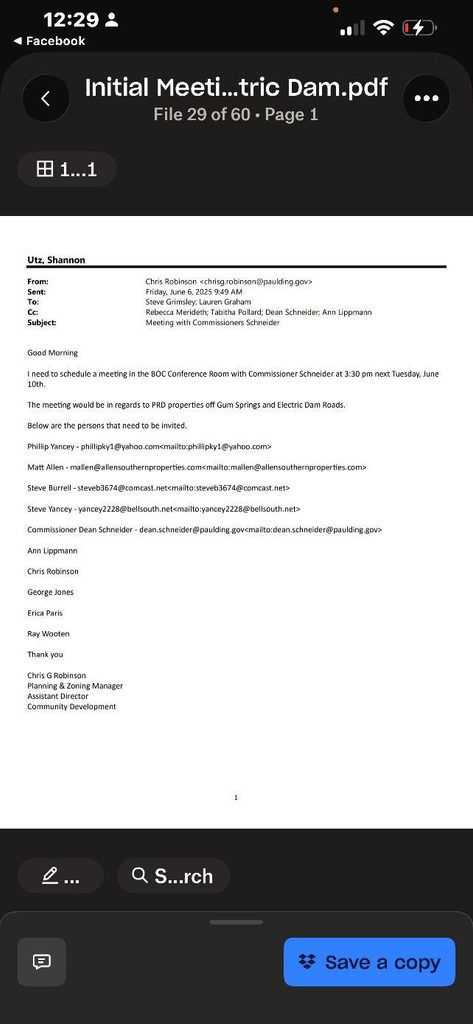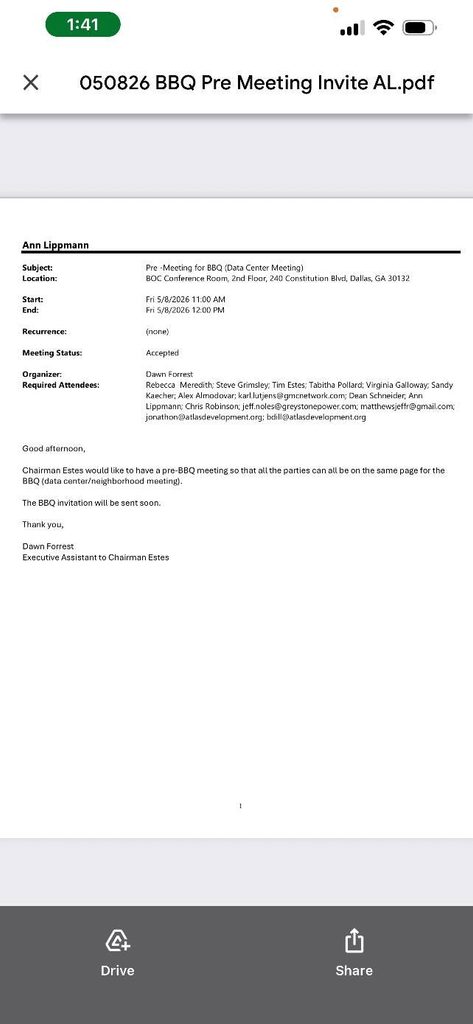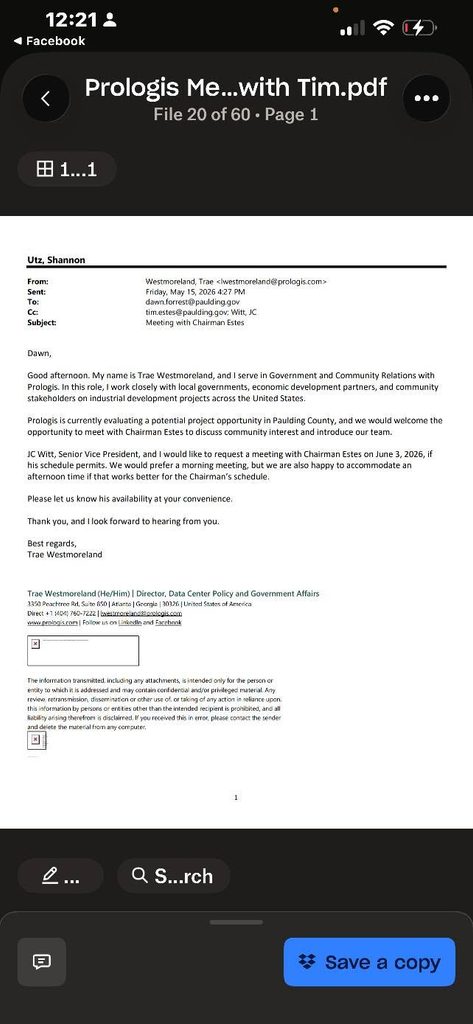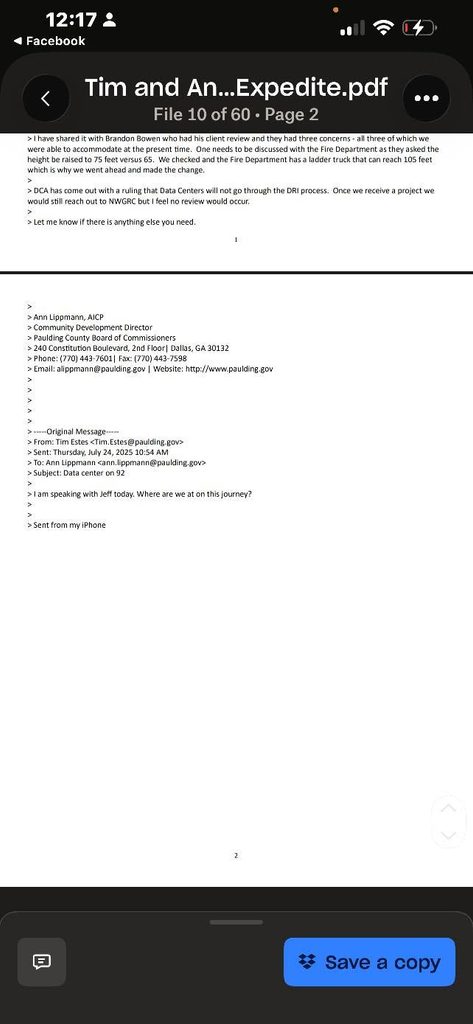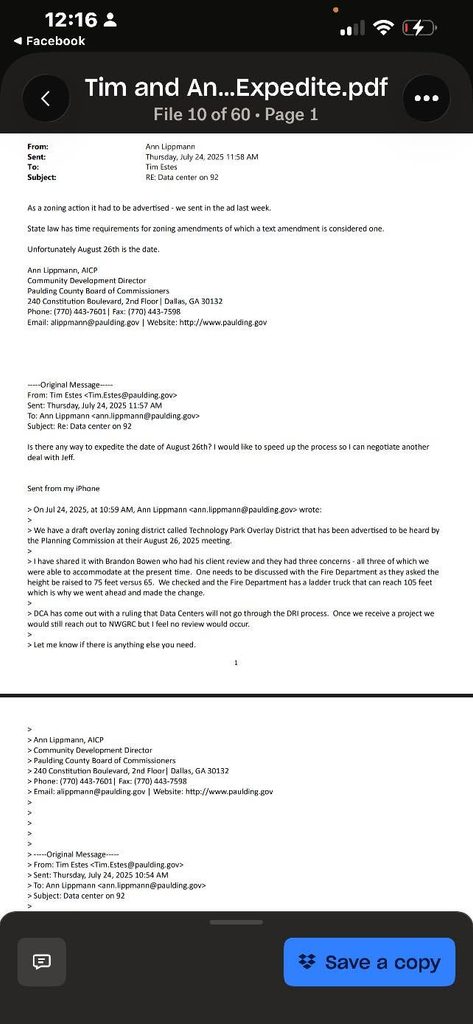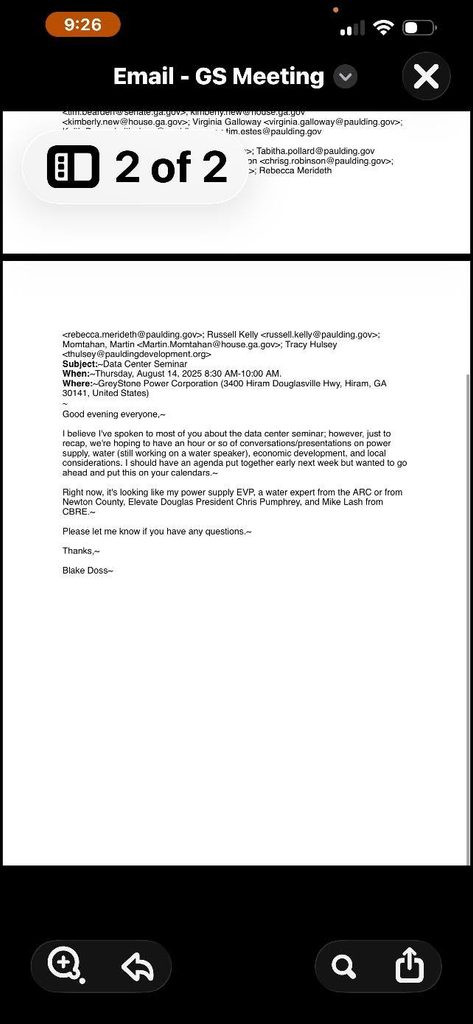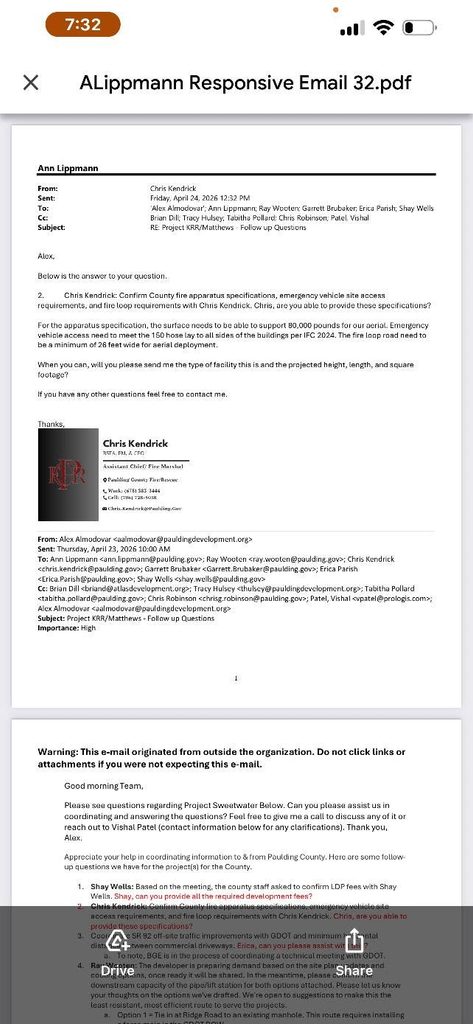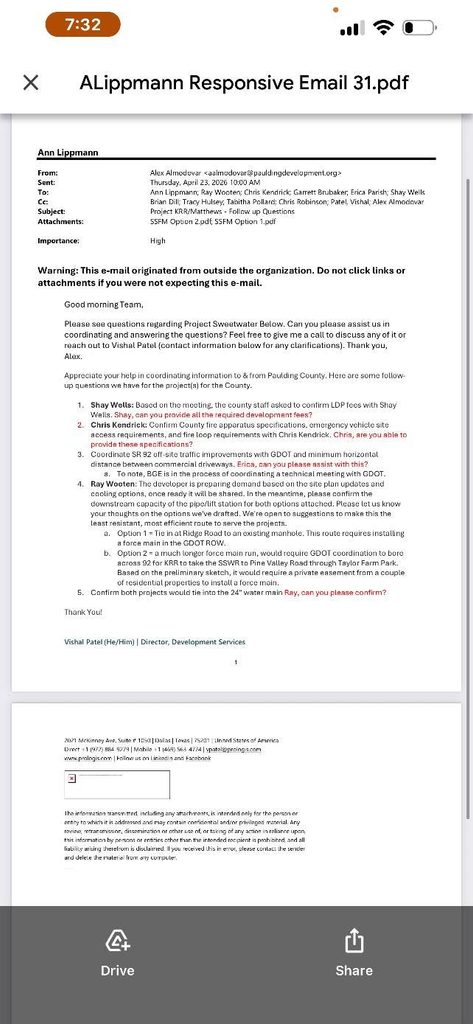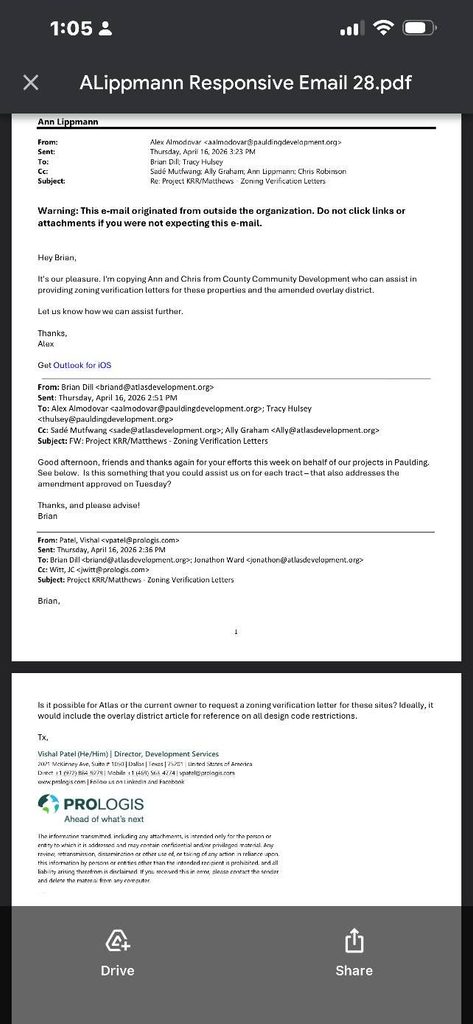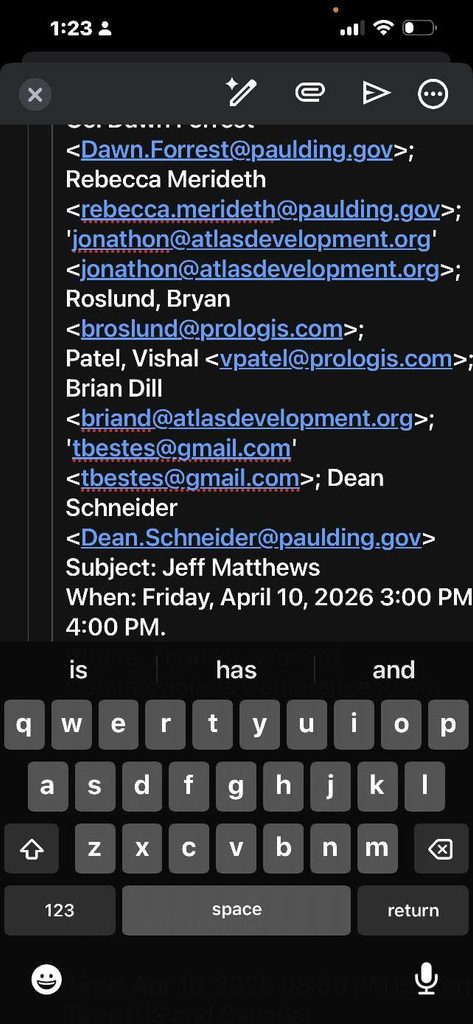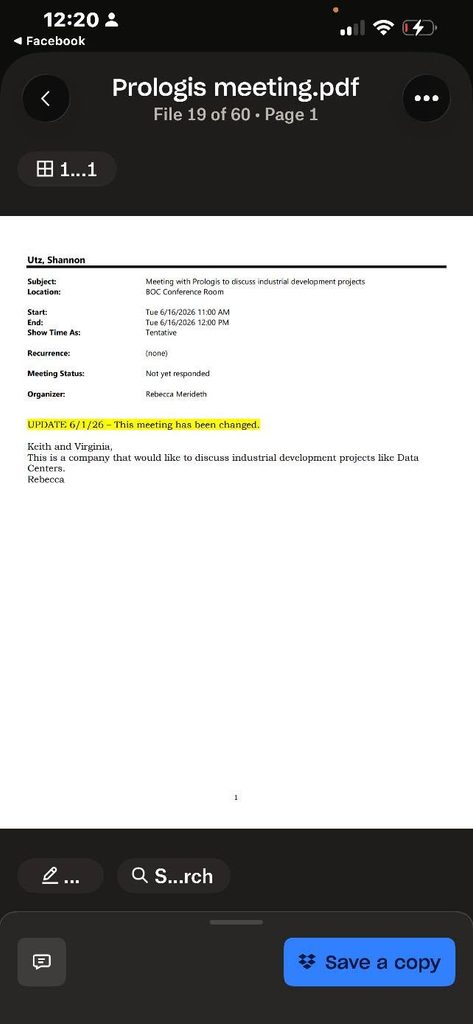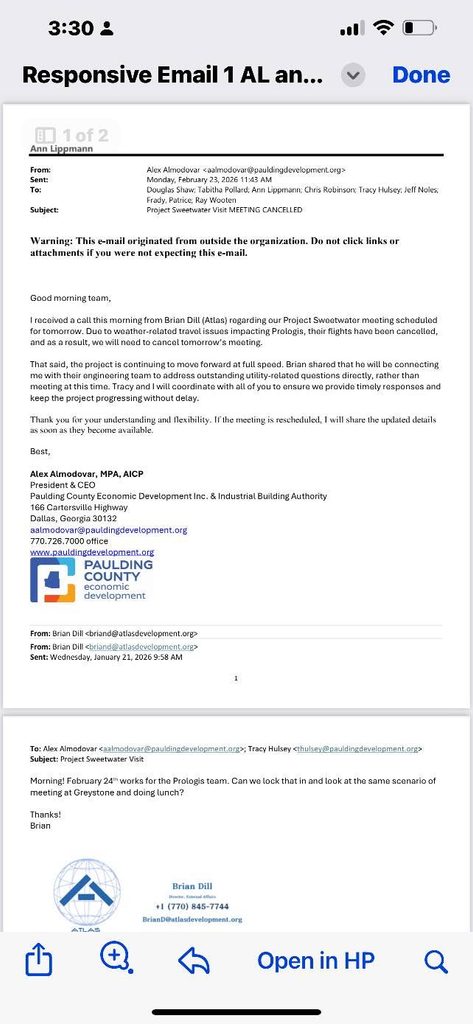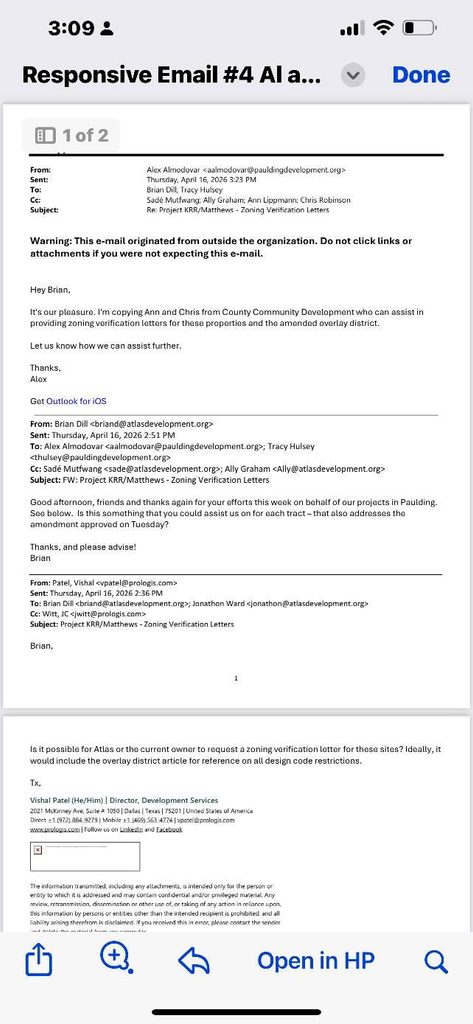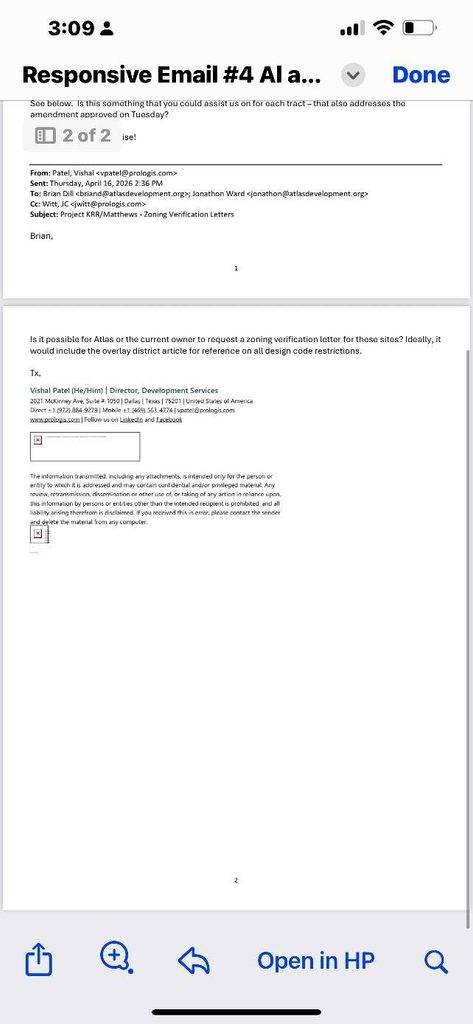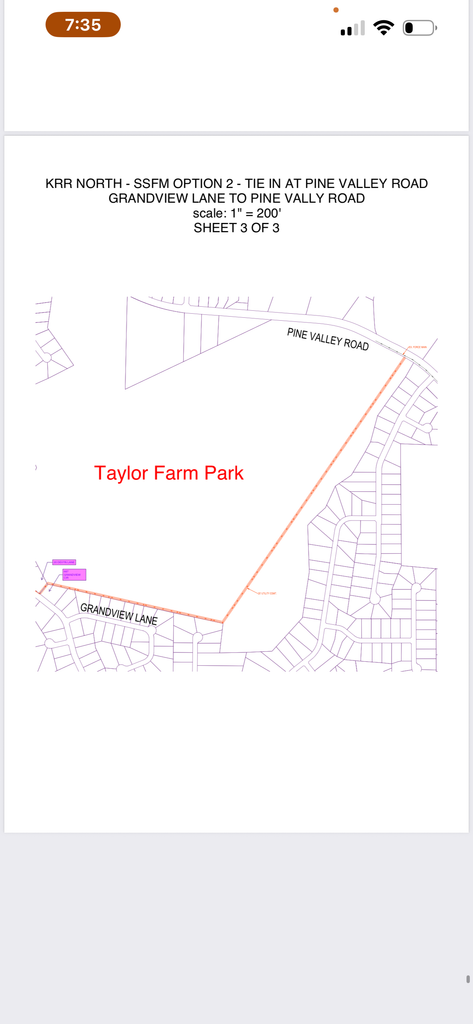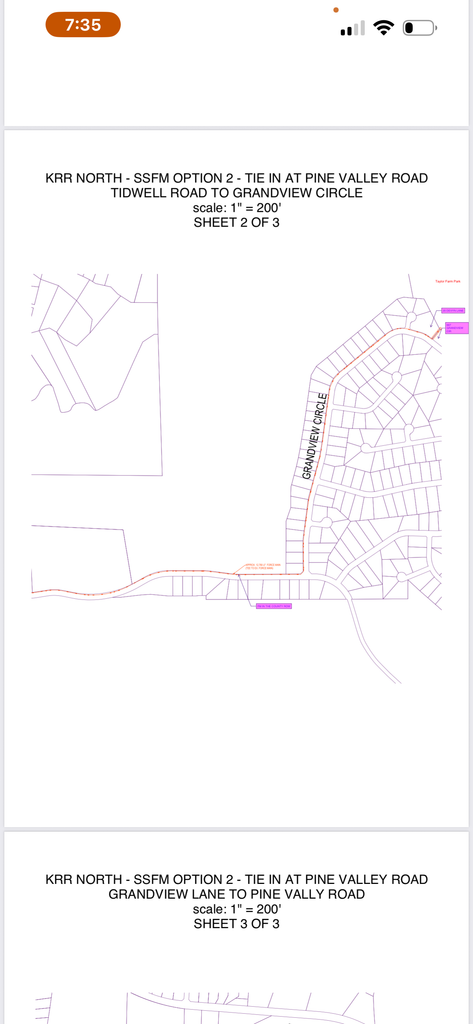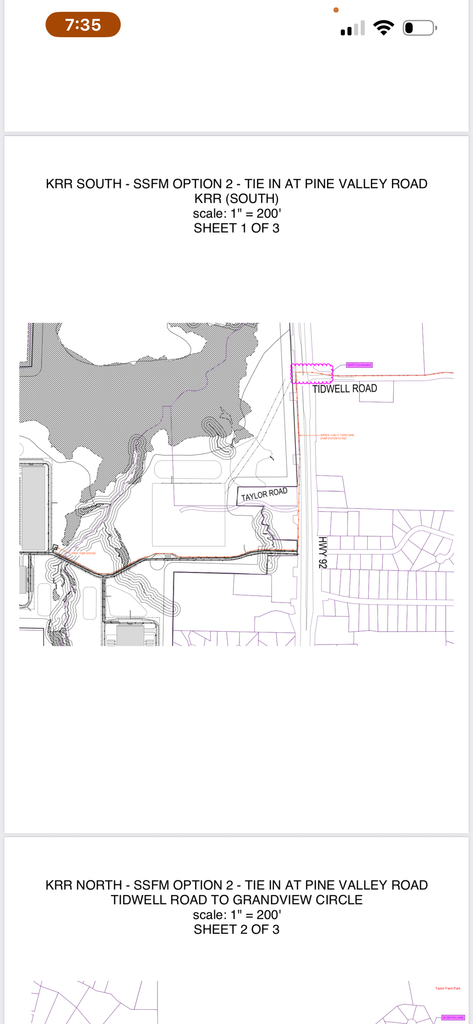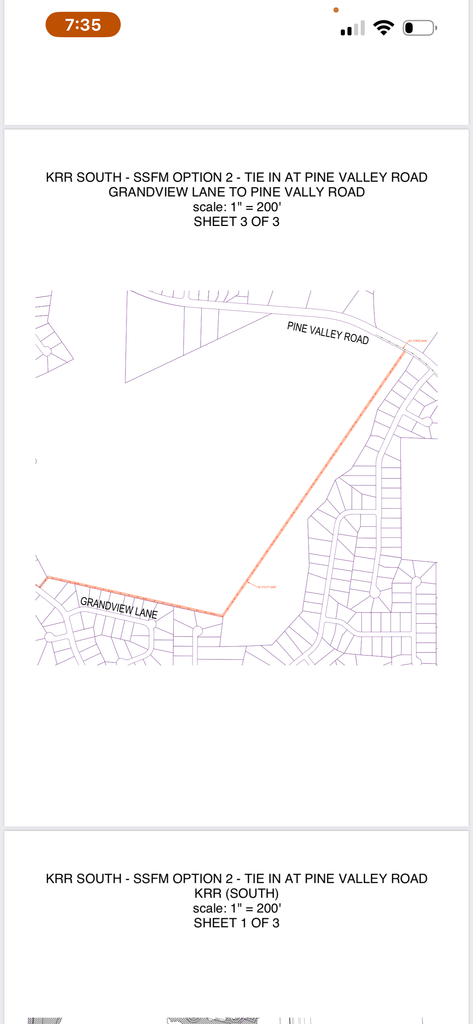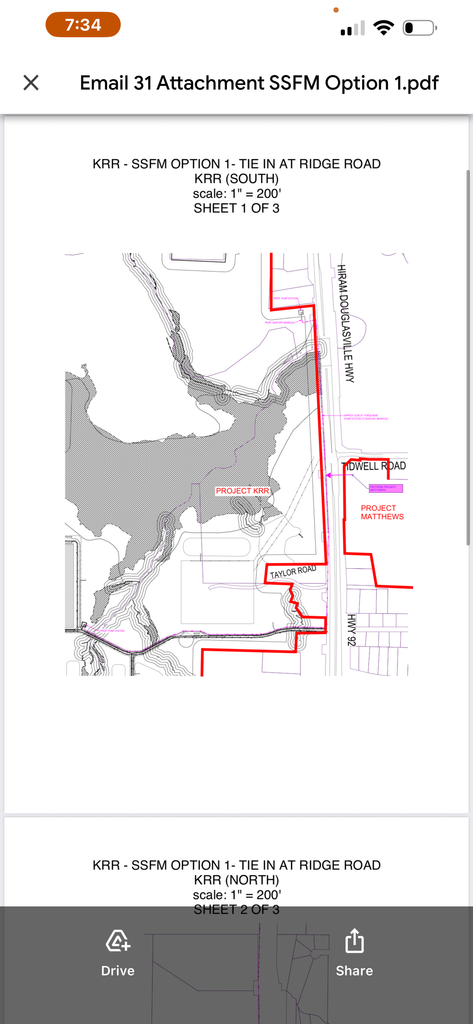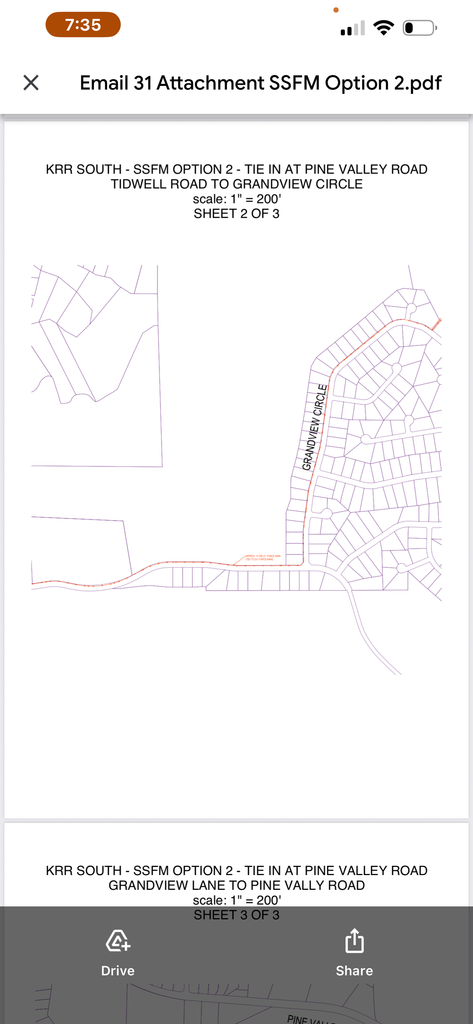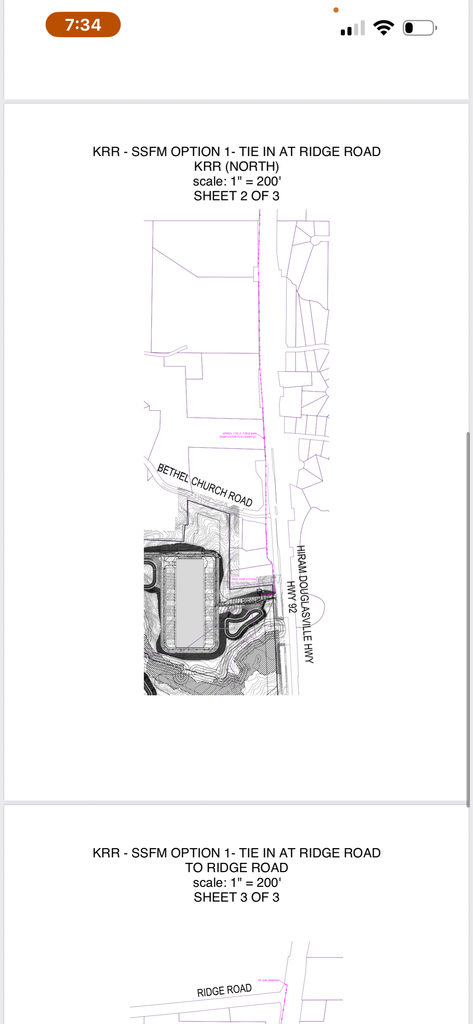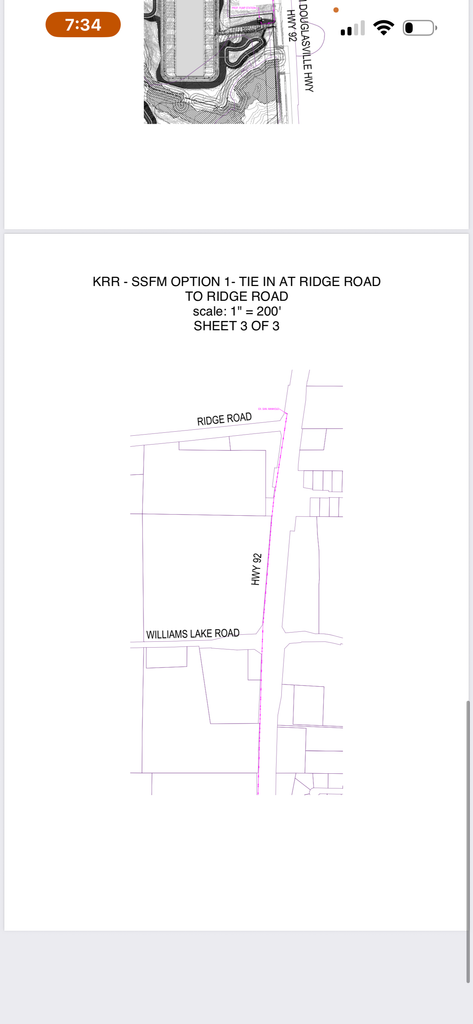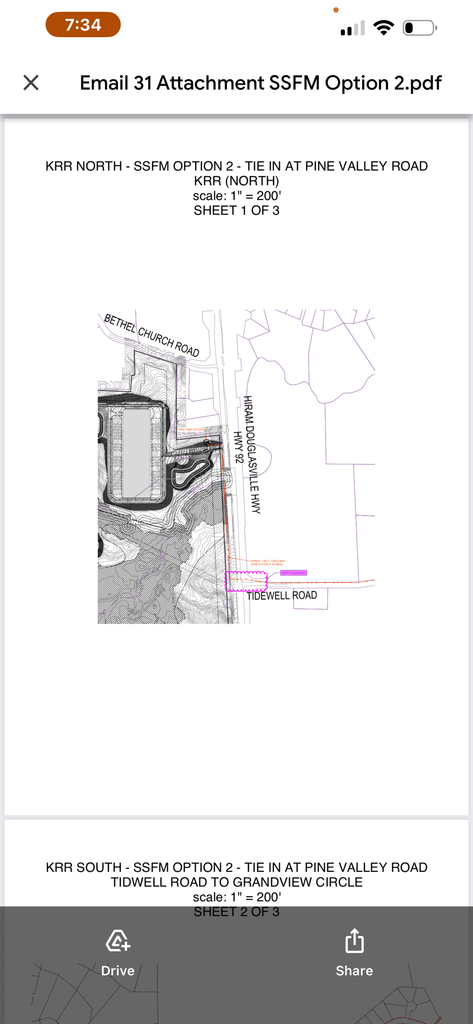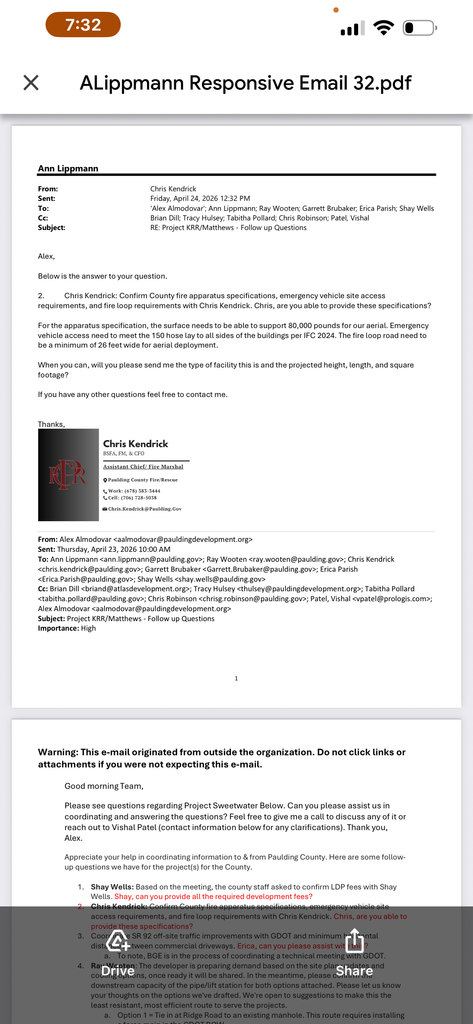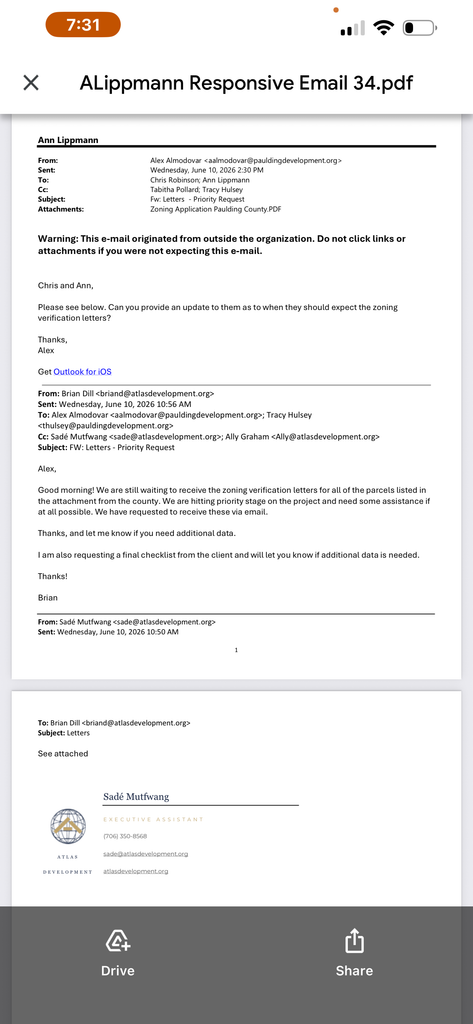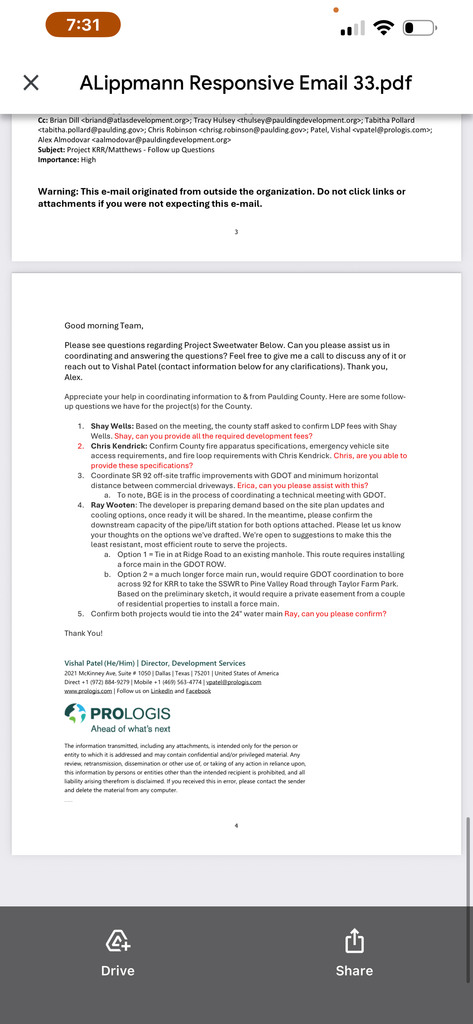
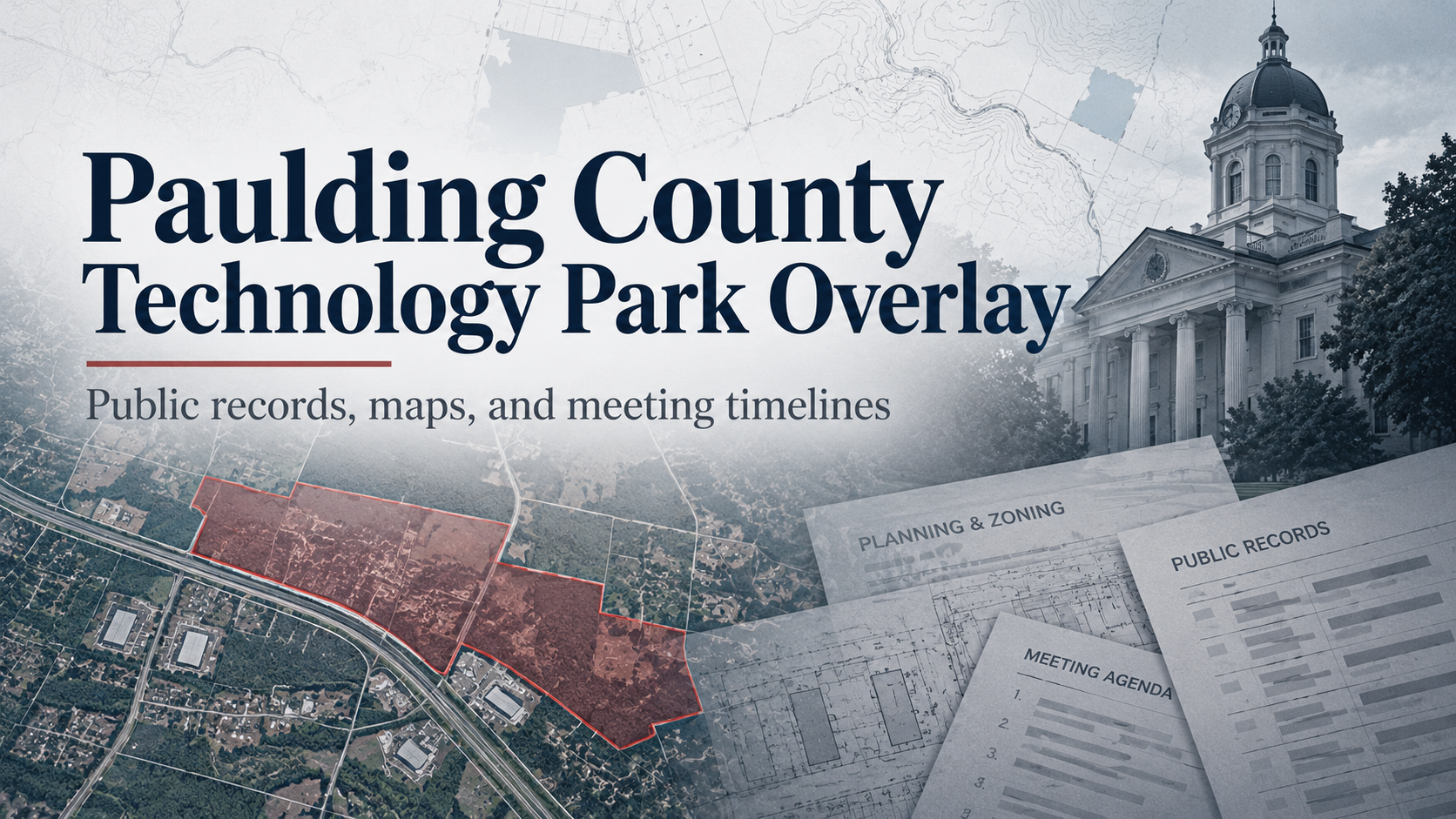
Paulding County residents have been asking questions for months about the Technology Park Overlay District, data centers, what county officials knew, when they knew it, and how much information was actually shared with the public. With emails, county records, ordinances, meeting agendas, public statements, and news reports now available, there is enough documentation to move past Facebook arguments and start looking at the actual timeline. This is not about telling anyone what to believe. It is about putting the public record in one place so residents can read the facts, compare them to what has been said publicly, and decide for themselves what they think happened.
We need the timeline.
This article is not intended to tell residents whether they should support or oppose data centers, nor does the available documentation establish corruption, backroom deals, intentional concealment, or improper motives.
The documentation shows that data centers were being discussed and incorporated into county policy well before many residents became aware of what was happening. Paulding County residents deserve the opportunity to see that information and evaluate it for themselves.
Let’s start with May 2025.

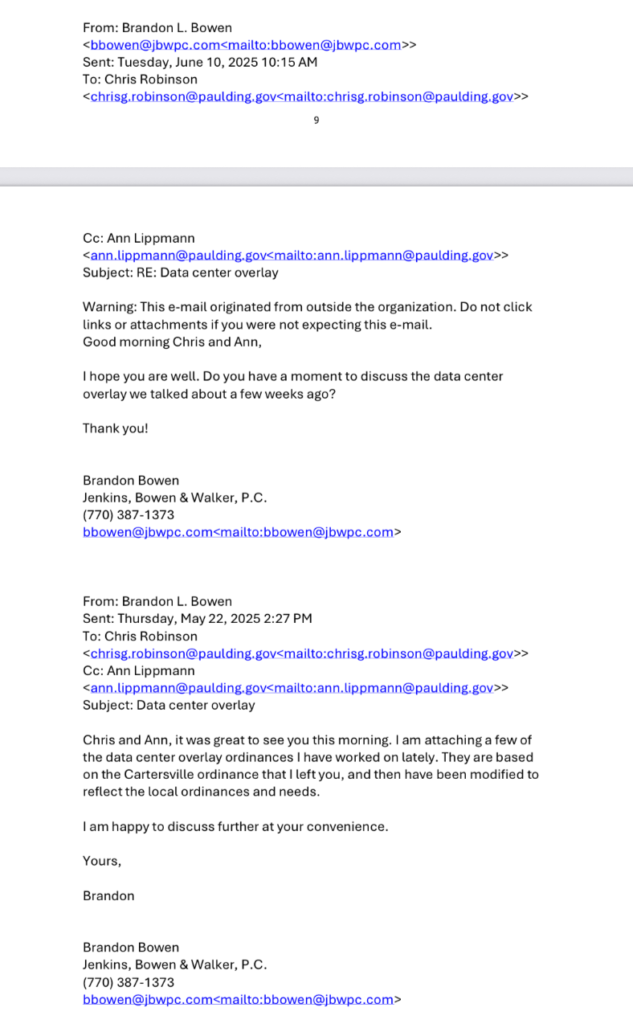
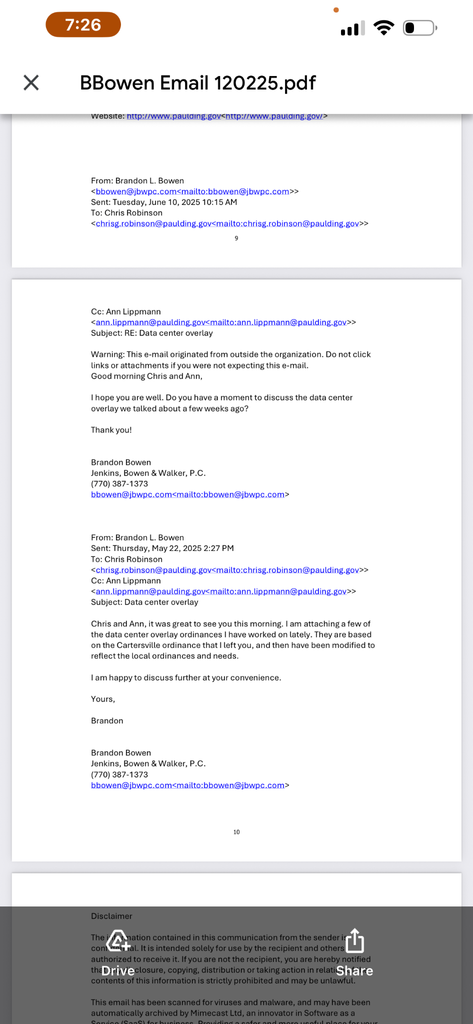
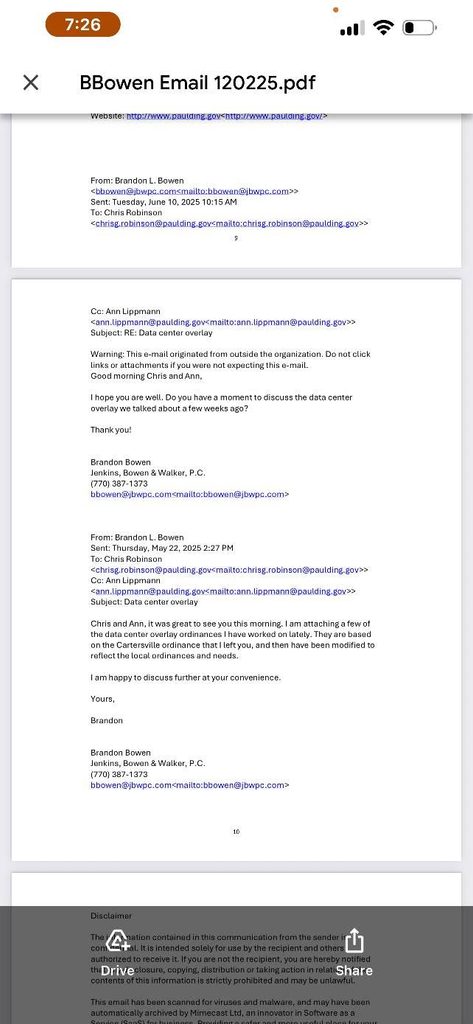
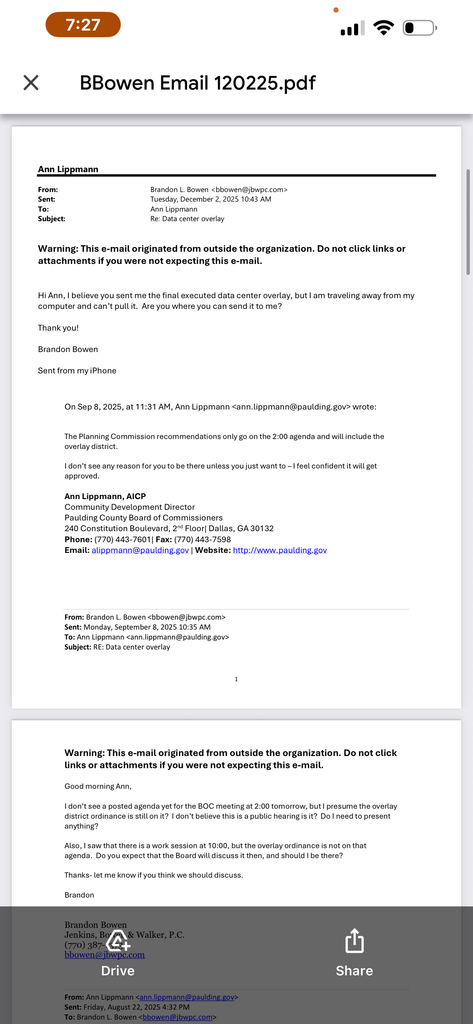
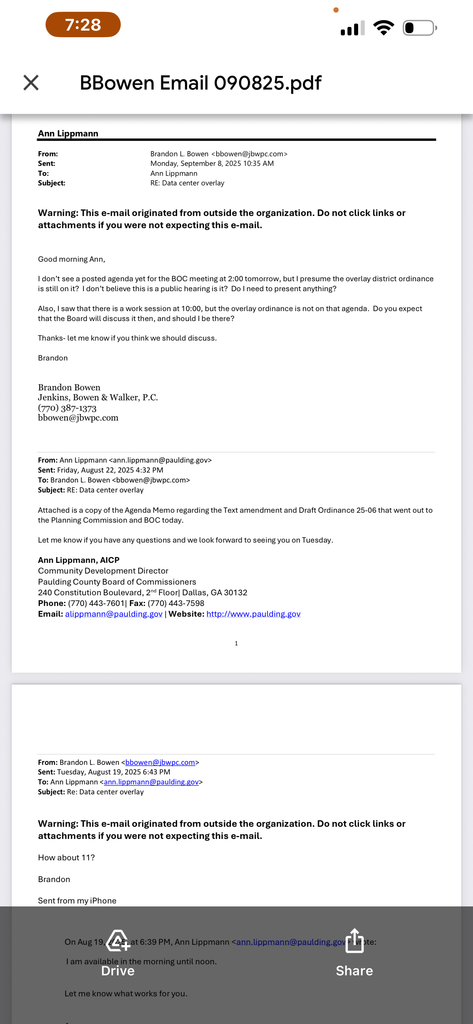
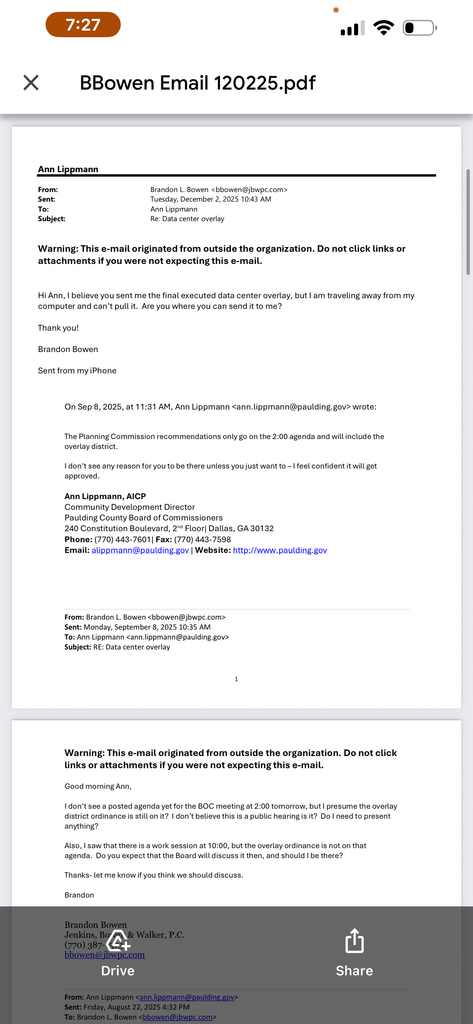
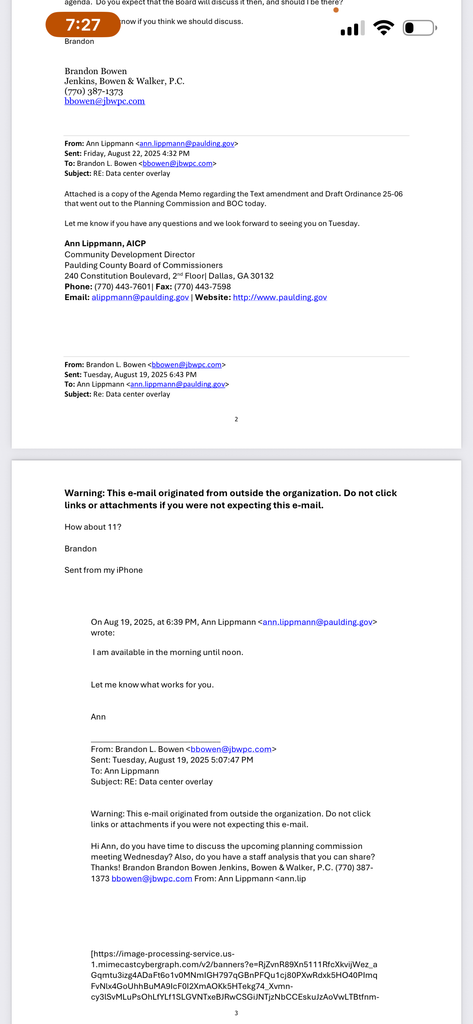
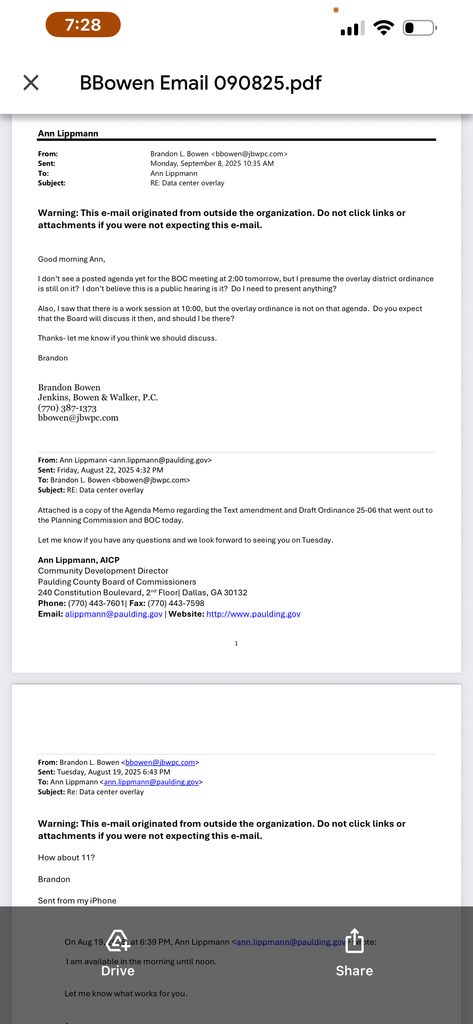
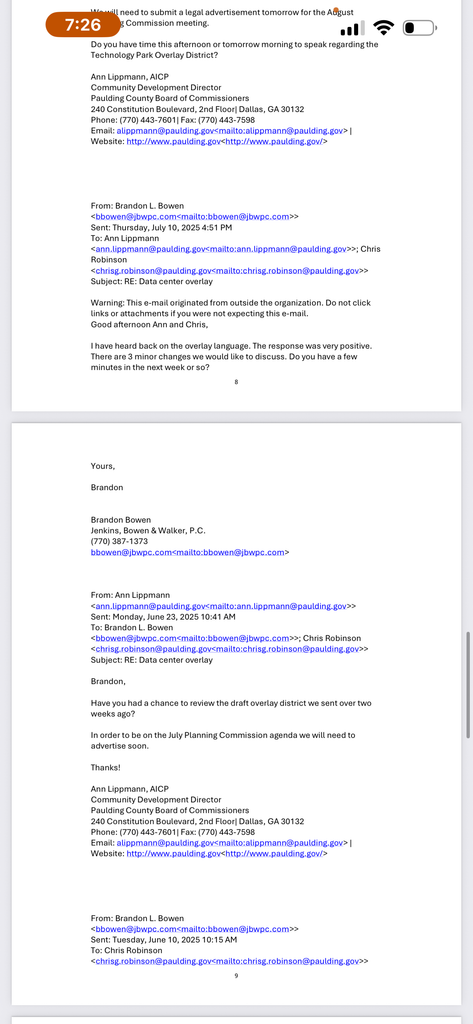
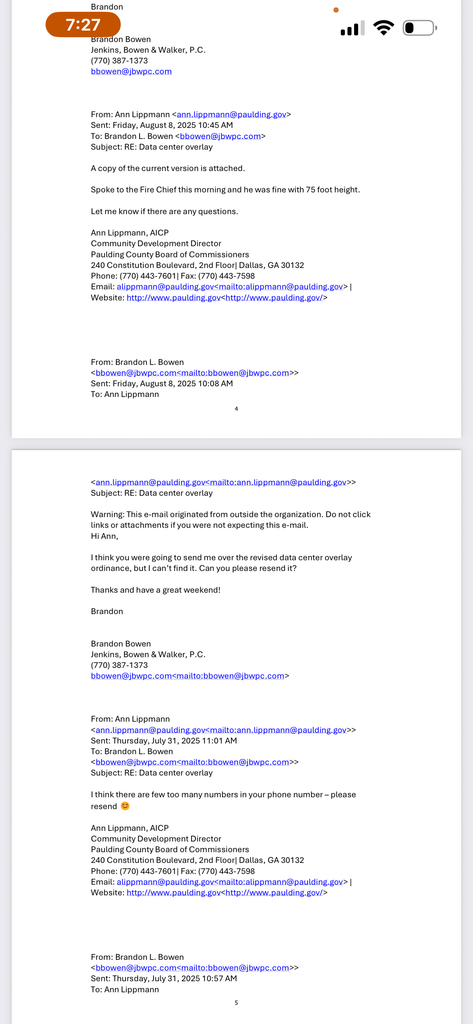
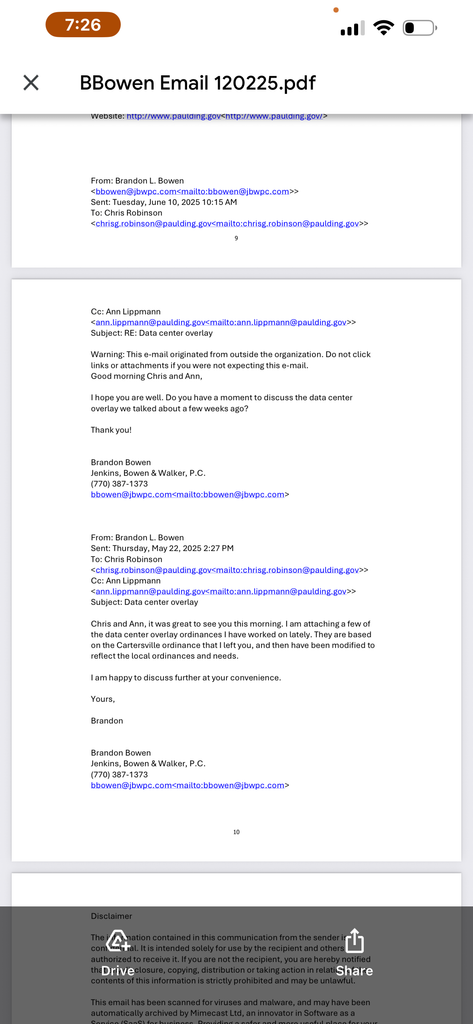
On May 22, 2025, attorney Brandon Bowen emailed Paulding County officials Chris Robinson and Ann Lippmann following a meeting that morning. He wrote that he was attaching several “data center overlay ordinances” he had worked on and said they were based on a Cartersville ordinance and modified for local ordinances and needs. On June 10, he followed up asking to discuss “the data center overlay we talked about a few weeks ago.”
That wording matters.
It did not say a general technology ordinance that might someday include data centers.
The email said “data center overlay.”
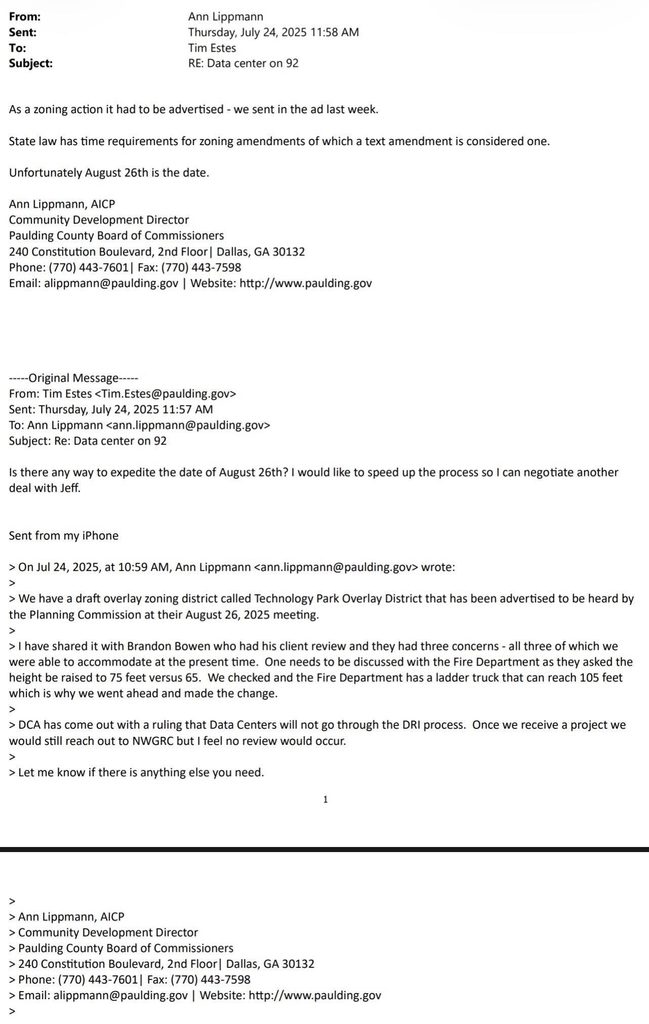
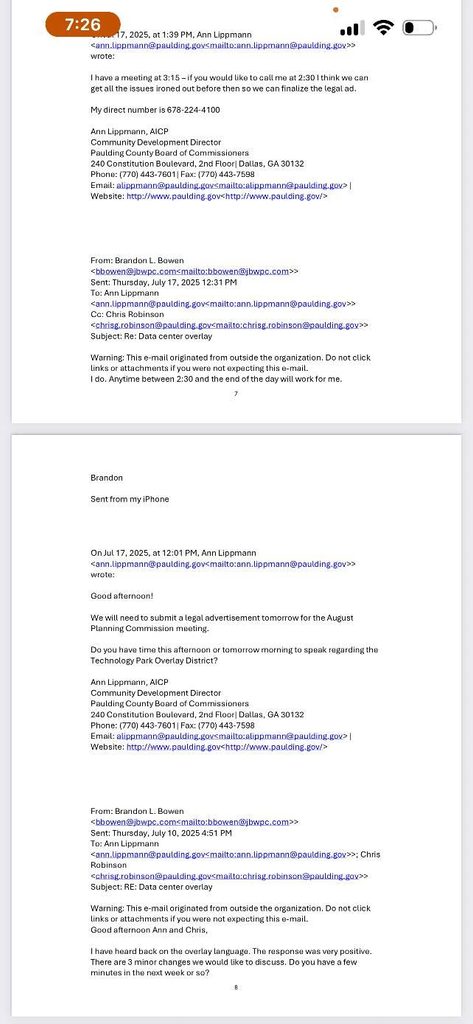
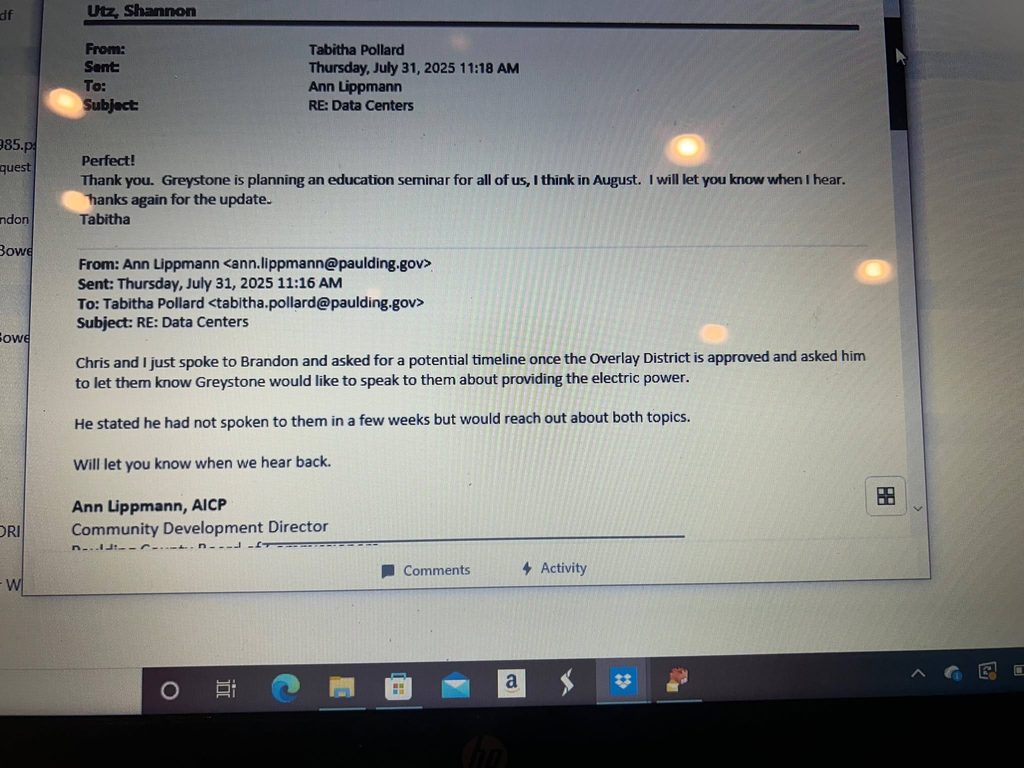
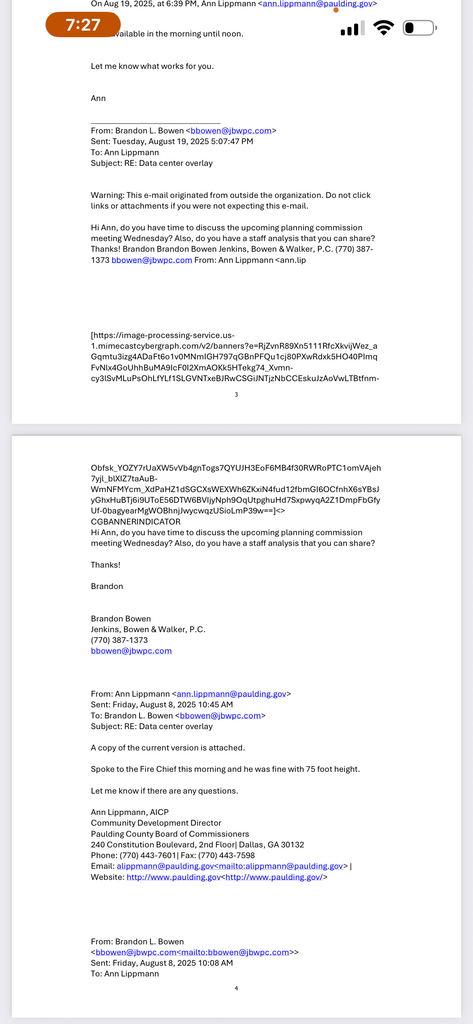
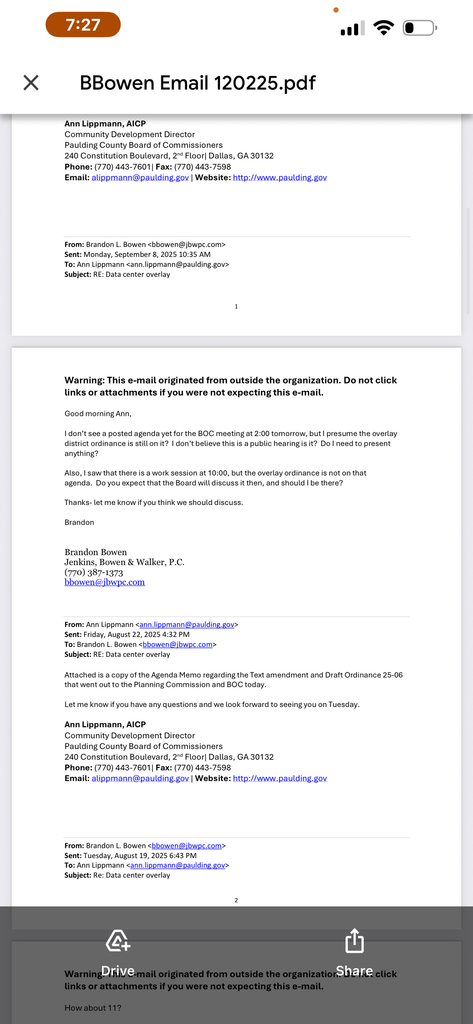
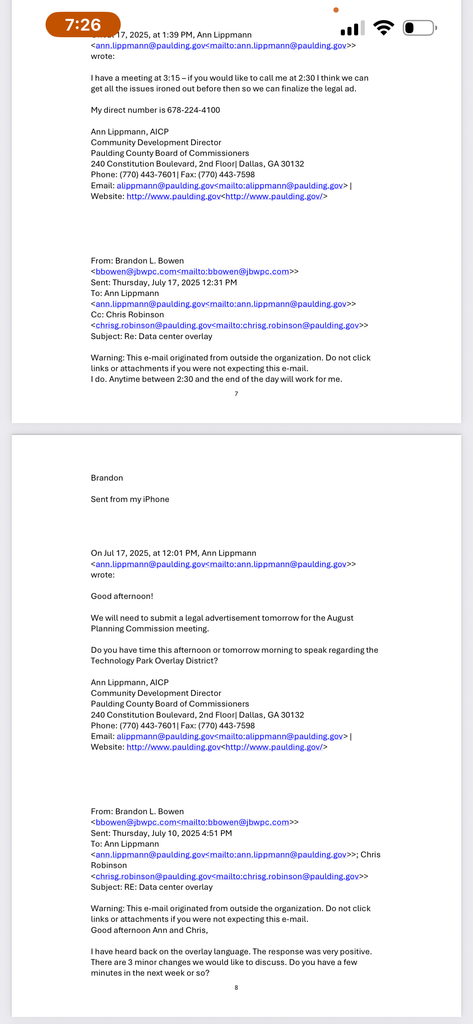
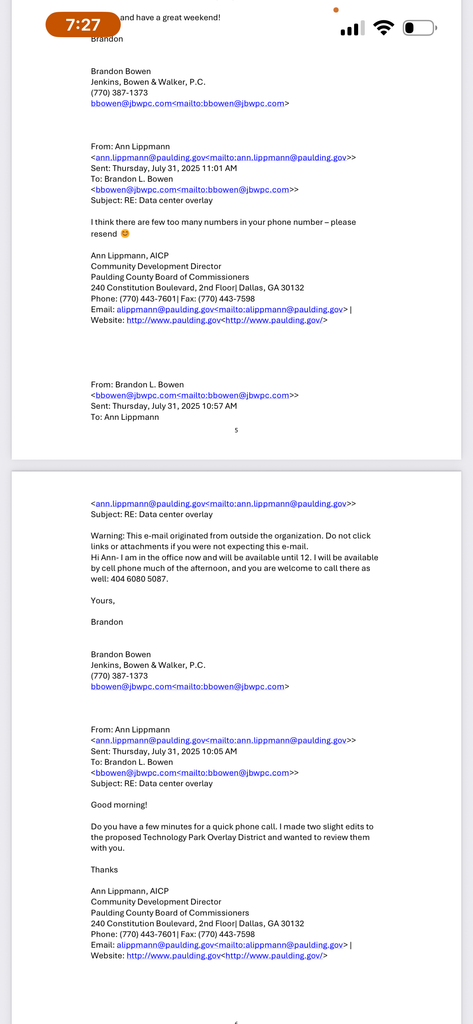
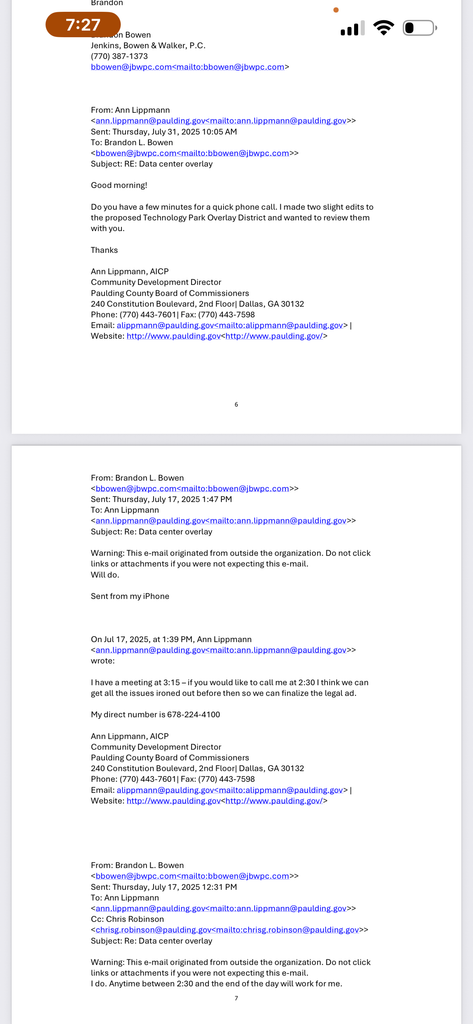
The correspondence continued. On June 23, Community Development Director Ann Lippmann followed up about the draft overlay district. On July 10, Bowen wrote that he had received feedback on the overlay language, described the response as “very positive,” and noted three minor changes to discuss. Then, on July 17, Lippmann wrote that the county needed to submit the legal advertisement for the August Planning Commission meeting and referred to the proposal as the “Technology Park Overlay District.”
Paulding County’s official calendar confirms that the Planning Commission met on August 26, 2025.
Then came September 9, 2025.
According to Paulding County’s own Unified Development Ordinance, Ordinance 25-06 was adopted on September 9, 2025. Among other changes, it added an entirely new Section 220-40 called the Technology Park Overlay District and specifically added parking requirements for “Data Centers (Technology Park Overlay District).”
There is no need to speculate about the intended purpose of that district because the ordinance states it directly.
Section 220-40.01 says the Technology Park Overlay District “allows the siting of ‘Data Centers’” on designated areas of at least 50 acres. It goes on to address technology infrastructure, data hosting, water availability, electrical capacity, setbacks, buffers, noise, screening, security, backup power, and protection of surrounding uses.
That is language contained in the county’s ordinance, not a social media interpretation.
That distinction becomes especially important when phrases such as “there was no data center project” are used publicly.
There is a significant difference between saying there was no specific data center application before the Board of Commissioners and saying the county had not yet created a zoning framework specifically designed to allow data centers.
Those are not the same statement.
On June 24, 2026, Chairman Tim Estes told WSB Radio that there were no new data center applications before the commission at that time. He also said residents would receive information as county officials received it.
That statement regarding active applications can be accurate, and the earlier documented history can also be accurate.
By that point, the county had already spent months developing overlay language, adopted the Technology Park Overlay District in September 2025, amended it again in December, and revised it again in April 2026.
Those facts can coexist.
That distinction is exactly why terminology matters.
The overlay did not approve construction of a particular data center. Under the county’s ordinance, a data center still cannot simply begin construction. The ordinance requires construction plan review, county verification that applicable requirements are satisfied, compliance with fire, building, state, and federal requirements, and, when applicable, a Development of Regional Impact review.
However, creating the overlay changed what could potentially be developed on the designated property.
That is why residents began asking how such a significant land-use change occurred without broader awareness among many people living near the affected areas.
There was a legal public notification process.
Paulding County’s zoning ordinance requires a Planning Commission public hearing before the Board acts on a proposed amendment. It also requires legal notice to be published in a newspaper of general circulation at least 30 days and no more than 45 days before the hearing. Paulding County identifies the Dallas New Era as the county’s legal organ for governmental notices.
But there is another part of the rule residents need to understand.
The ordinance specifically states that familiar rezoning signs must be posted on the property when a rezoning is initiated by anyone other than the local government.
That helps explain part of the frustration expressed by residents.
Formal legal notice may have occurred, yet homeowners near the affected land still did not receive the kind of direct notice they would normally expect for a private rezoning application.
Those are also two things that can be true at the same time.
Meeting the minimum legal notice requirement and creating broad public awareness are not necessarily the same thing.
Then the boundaries changed.
Paulding County’s own amendment history shows that on December 9, 2025, Ordinance 25-07 increased the Technology Park Overlay District to approximately 1,314 acres and added another tax parcel with a mandatory 200-foot undisturbed buffer.
On April 14, 2026, Ordinance 26-02 again revised the Technology Park Overlay District boundaries and buffer requirements. The current published UDO identifies approximately 995 acres within the district and lists the individual tax parcels included.
So this was not one ordinance passed in September and never touched again.
It continued to change.
Then residents began showing up.
The county’s own May 26, 2026 Board of Commissioners agenda lists residents speaking specifically about the Technology Park Overlay District and data centers.
By June 9, the official agenda shows even more residents speaking about the Technology Overlay, a data center on Electric Dam Road, a pending data center, the reservoir, and data centers generally.
By June 23, the meeting was standing room only.
WSB-TV reported that residents said they felt blindsided because they did not know the Technology Park Overlay District existed. Commissioner Sandy Kaecher responded that county officials had been working with data center information for approximately a year and a half and said the issue had not appeared overnight.
Interestingly, the emails that are now available support part of that statement.
This did not appear overnight.
Correspondence using the words “data center overlay” dates back to at least May 2025.
At this point, the larger unanswered question is no longer whether the county government was working on data center policies before residents became alarmed.
The documents establish that county staff and an attorney working on the ordinance were discussing data center overlay language in 2025.
The more important question is how effectively that information reached the residents whose homes and communities could eventually be affected.
Accuracy also requires acknowledging what the available documents do not establish.
The emails reviewed do not prove that every commissioner personally received every communication between Community Development staff and the attorney.
They do not prove that every commissioner knew every detail at the same point in time.
They do not prove that a particular developer secretly wrote the ordinance.
They do not prove an improper financial relationship.
They do not prove that anyone intentionally concealed information.
And they do not prove that every parcel inside the overlay will become a data center.
Unanswered questions should not be converted into accusations simply because accusations make stronger social media headlines.
There is enough documented information to warrant serious questions without doing that.
On July 28, 2026, after weeks of public concern, the Paulding County Board of Commissioners unanimously approved a temporary moratorium on data centers through January 1, 2027 while county officials reconsidered development standards. Commissioner Virginia Galloway said officials had been “learning a lot as we go” and that the pause would give the county time to get its code together and consider community input.
That does not mean the original ordinance was illegal.
It does not mean every allegation made by residents is true.
It means the commissioners ultimately determined that additional time was appropriate before moving forward with new data center activity.
FOX 5 reported that the moratorium does not apply to qualifying applications already filed before the moratorium, while also reporting that it was unclear publicly exactly what applications might fall into that category.
And that brings the discussion back to transparency.
Chairman Estes publicly said residents would receive information and data when county officials received it.
That is exactly what should happen.
Not through rumors.
Not through selective Facebook posts.
Not through residents having to piece together screenshots from open records requests one email at a time.
Put the timeline in one place.
Show residents when the overlay concept began.
Show the original draft.
Show the legal notice.
Show the August 2025 Planning Commission materials.
Show the September 9 vote.
Show what changed in December.
Show what changed again in April.
Show the maps.
Show the parcels.
Show what applications currently exist, if any.
Show what utility capacity studies or requests exist, if any.
Show the public which documents relate to general policy discussions and which documents relate to an actual development proposal.
Then residents can review the information and form their own conclusions.
This article is not intended to tell anyone which side they are required to take.
Some residents may believe data centers could bring economic benefits and belong in properly regulated areas.
Others may believe the demands on power, water, land, noise, and nearby communities make them inappropriate for Paulding County.
Reasonable people can review the same information and reach different conclusions.
But they should at least be looking at the same information.
That is where much of this public conversation has broken down.
The debate should not be reduced to labeling residents “misinformed” simply because they are asking questions.
It also should not involve declaring county officials dishonest without evidence.
It should be about getting the complete record in front of the public.
The public record currently establishes that work explicitly described as a “data center overlay” was occurring inside county government by May 2025. It establishes that Ordinance 25-06 created the Technology Park Overlay District in September 2025. It establishes that the stated purpose of that district includes allowing the siting of data centers. It establishes that the district changed again in December 2025 and April 2026. It establishes that residents were publicly raising concerns by May and June 2026. And it establishes that the Board ultimately adopted a temporary moratorium in July 2026 while reconsidering its standards.
Those are not rumors.
They are records.
There may be reasonable explanations for decisions made throughout this process. County officials should have the opportunity to provide those explanations, and additional public records that materially change or clarify the timeline should be considered and reflected.
But residents also have every right to ask how a policy explicitly permitting data centers developed, who participated in that process, when elected officials became aware of its intended use, and whether a public notification process that may have satisfied the legal requirements was sufficient for a land use decision of this magnitude.
Accountability does not require assuming the worst about anyone.
Sometimes accountability simply means putting the documents on the table and asking those involved to explain how the county got from Point A to Point B.
The information is available.
Read the ordinance.
Read the emails.
Read the agendas.
Listen to the meetings.
Then form an opinion based on the record.
Whether someone supports data centers, opposes them, or has not yet decided, Paulding County residents deserve facts before opinions.
And the documents should be allowed to speak for themselves..